Episode Transcript
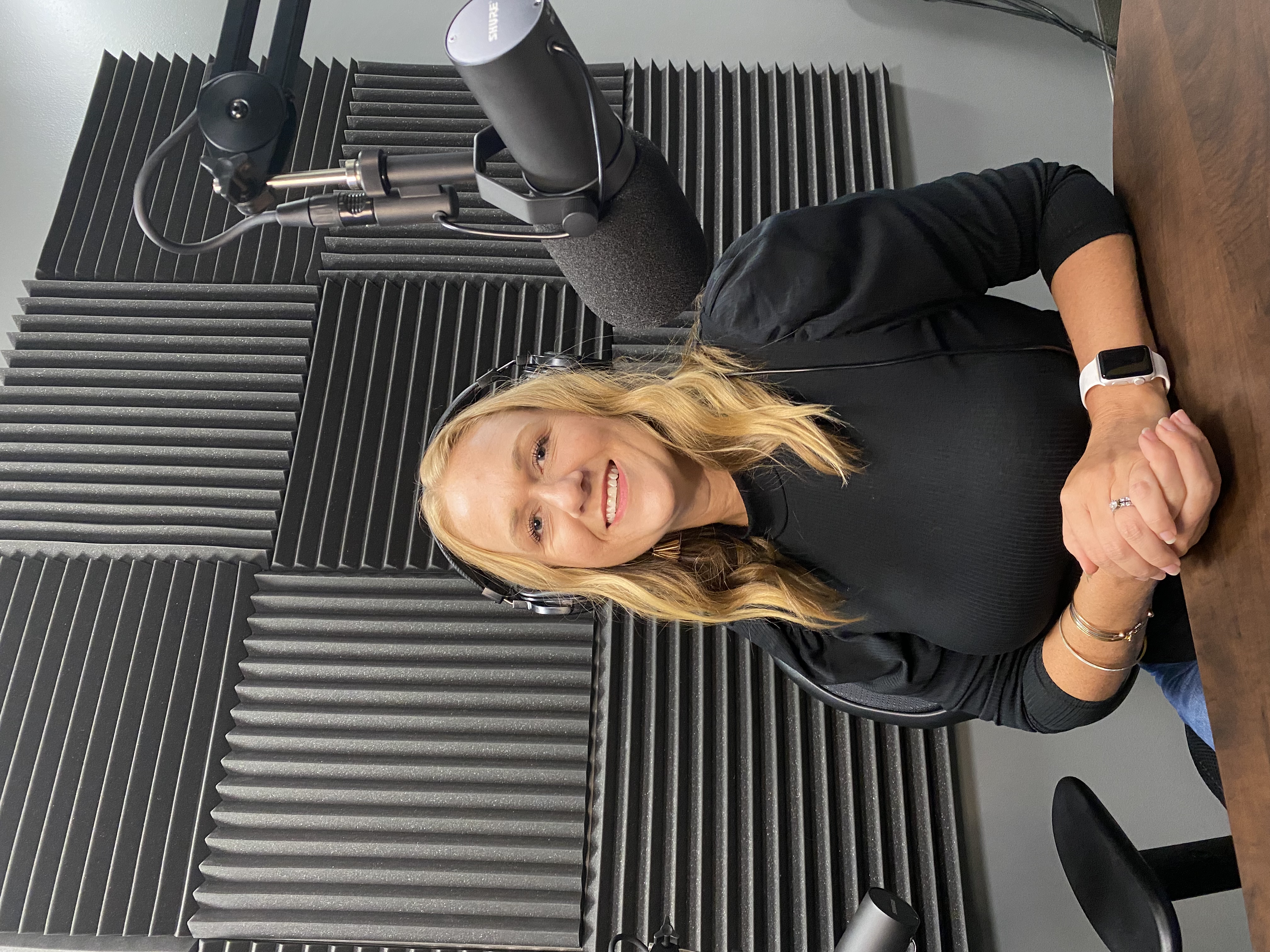
[00:00:03] Speaker A= Kelly Walker: Welcome to Hustle and Pro. This is episode 218.
I'm your host, Kelly Walker, and welcome to the show Drew Stover.
[00:00:12] Speaker B = Drew Stover: Thank you.
[00:00:13] Speaker A: I'm so excited to talk to you. I mean, we've talked many times, but never on camera.
[00:00:17] Speaker B: Yes.
[00:00:18] Speaker A: And officially, formally like this. So I just want to, like, share your soccer story. This is a soccer episode.
Spoiler alert. I wanted to share your soccer story just with our audience because I've kind of watched you grow up in soccer, so I want to hear it from you.
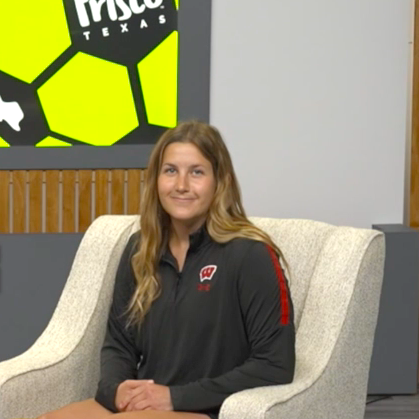
First of all, you're a goalie at Wisconsin.
[00:00:38] Speaker B: Yes.
[00:00:38] Speaker A: Goalie, goalkeeper, goalkeeper.
[00:00:40] Speaker B: Either one.
[00:00:40] Speaker A: Either way. What do you say?
[00:00:42] Speaker B: I say goalkeeper, but that's the long, official version of it.
[00:00:46] Speaker A: That is.
[00:00:46] Speaker B: Yeah, I was gonna say, I feel like a lot of people use goalie
[00:00:49] Speaker A: keeper, but if you were to walk up to somebody on the street. I'm a goalkeeper.
[00:00:53] Speaker B: Yes. Goalkeeper. Yes.
[00:00:55] Speaker A: Nice. All right, I want to start with your soccer story now. So, like, what are you doing now? What have you just been doing these last few years?
[00:01:03] Speaker B: Okay. Yeah. So I am about to start my fifth year at Wisconsin. So I have played now two seasons. I red shirted my freshman year. I got to come in a little bit my sophomore year, and then, yeah, I played my junior and senior year. It was awesome. And I get to come back for one more because I registered it my freshman year. So that is also pretty awesome. That is. Yeah.
[00:01:28] Speaker A: Okay. So that's kind of like a journey in itself, just that college piece. Right. I mean, you have all the. We'll talk about all the things leading up to that and everything, but just that part of it. Like, what were some of the. At the beginning, you go there and you think, okay, I'm going to play college sports. And then, like, is it a little bit hard? Because are you not starting? Are you not playing? Like, you were just coming off of, like, a lot of success here. Right?
[00:01:53] Speaker B: So, yeah, I would say that was one of the hardest times of my life, freshman year. I mean, I came in with a lot of confidence. I feel like any freshman kind of does, because you come from a place where you're kind of like, top dog, and then, yeah, you walk in. And for me, I actually got to work with, like, a great group of goalkeepers, but I had at the time a senior, two seniors in a fifth year, so really, like, these women, and I'm coming in as this 18 year old, so I think that made a huge difference.
Yeah, but it was really challenging. There are a lot of things that I had to overcome my freshman year just because I think it is really hard to go from playing your whole life to sitting on the bench and getting to cheer your team.
[00:02:37] Speaker A: So if they're that much older, is it pretty evident, like, when you go there, like, you're not in line, you're in the back of the line?
[00:02:44] Speaker B: I would say I. At the beginning, I still had a little bit of hope, like, oh, okay, I can get to the top of this. And I think now, being on the other side of it, it is so, like, wow. Yeah, I was not ready at all. Definitely should not have been playing. But I think at the time, I still kind of believed in myself, and I was like, I should be playing. I should be playing.
But, yeah, definitely being the older girl now and seeing the youngers come in, I'm like, yeah, okay, that was me.
I was not ready at all. Yeah.
[00:03:15] Speaker A: So in the recruiting process, I hear kids all the time say, like, well, or parents probably more, my kid is gonna go to a place where they can play, step on the field and play, rather than, like, watch. Was that, like, when you're getting recruited, Is that part of the conversation? Do they actually say, you're not gonna be our first up, or you are? And did you have those conversations?
[00:03:38] Speaker B: Yeah, I think that kind of happens in most of the phone calls I had, at least kind of, I guess, depending on the program, like, what part I'd play.
From the start, I knew I was redshirting my freshman year, but I think it was kind of just like the, oh, I want to try anyways.
And there were four of us, so I was like, okay, I don't want to be fourth. I want to be, like, third. Maybe. Maybe creep my way into second. But, yeah, it had been a conversation all along. I knew from the very beginning that I would have this fifth year. So I think that's also kind of a cool thing and kind of helps you be able to develop at the beginning, for sure.
[00:04:14] Speaker A: How did you resist the, like, transfer temptation in this world of now, everybody moves colleges in sports?
[00:04:23] Speaker B: I think it was actually. This is really funny.
My mom, she. I remember calling her. It was the fall, and I mean, there are people on my team that were in my class that were freshmen. They same thing. They're like, I want to transfer. I want to transfer because everyone around us is transferring. And I remember calling my mom, and she's like, one more semester. If you still hate it after one more semester, then, like, we can think about it. But she was like, you're not, like, giving up this quickly. And that was literally the reason I stayed, probably.
And so I. Yeah, I'm really glad that she kind of was the one to tell me, you gotta say one more semester. You can't quite get it, because I
[00:04:59] Speaker A: would probably say that's similar, but, like, you don't know wherever you're going is gonna be any different or better necessarily. And you've had friends. I know some of your friends who went and played in college. They've bounced around and moved around and get recruited or whatever. And so did you have those, like, thoughts?
[00:05:17] Speaker B: Thoughts, definitely, yeah, those thoughts. And I think when you see all these other people doing it, too, you're like, okay, it's normal now. It is. It's almost like, more rare to stay at a school for this long.
[00:05:28] Speaker A: That's why I'm like, oh, my gosh, fifth year.
Which I think it's cool, though, when you have your whole span at one school.
I don't know. It's just more pure that way, right?
[00:05:37] Speaker B: It is, for sure.
[00:05:38] Speaker A: Yeah. I'm sure you're glad now, looking back. Looking back, stuck in and you were at the same place all this time. But then let's tell me about, like, the growth piece of it. So you get there as a freshman, you want to play, but you don't realize yet as a freshman that you're not ready. And now looking back at the younger girls coming in, you see the difference. Like, what is the difference? And what did. I mean, it sounds so simple, but what did you learn and grow?
[00:06:01] Speaker B: Yeah, I learned so much, like, half of who I am, definitely, from those years, for sure.
Just. I think I don't even know, like, in what ways necessarily, but you can tell, like, a veteran goalkeeper at least. I can. Like, in the Big ten, you can tell a veteran goalkeeper to, like, a brand new. Like, even my junior year, like, starting and playing was so different than my senior year, really. And I think it's just like, knowing the people around you for sure. So, like, I've had the same back four for now, two years. And that's just like, we all know each other's, like, tendencies. We know, like, how to talk to each other and communicate. So I think that's a big part of it.
[00:06:38] Speaker A: And probably not even verbally. Like, you can tell by looking at their body language or them turning around looking at you, like, what y' all are thinking.
[00:06:46] Speaker B: Yeah. Actually, in the spring, the baby freshman goalkeeper that we had, she came in from high school early, and she was asking me, she's like, how do you know, when Haley, my center back, she was like, how do you know when, like, you're gonna do. We do, like, this play off of our goal kicks. And I'm like. She literally. We just, like, look at each other and we just know, like.
Yeah, exactly.
[00:07:07] Speaker A: But you can't know that right now.
[00:07:09] Speaker B: Exactly. Yeah.
[00:07:09] Speaker A: You gotta be out there a couple years and watch it.
[00:07:12] Speaker B: Yeah. Yeah, for sure. And then I would say, like, just confidence. Like, I think, obviously your confidence from high school, but then I think when you are playing at a high level like, that, I think it is hard to, like, build confidence and, like, really know what you're good at and what your strengths and weaknesses are, I guess. And I think there are way more weaknesses than what you realize you might have that would show in a college game compared to in high school. So I think that was definitely.
[00:07:43] Speaker A: You get knocked down a little.
[00:07:44] Speaker B: Yes. There was a lot that I learned. Yes. Yeah.
[00:07:48] Speaker A: Okay, then let's go back. I didn't want to start off with when you're little, because I do that a lot, and I just think it's exciting where you're at now.
But let's go back a little bit. When you were young, did you. Was it always just soccer or you did everything?
[00:08:03] Speaker B: I kind of did a mix of everything. I did a lot of soccer just because my dad had. I know.
[00:08:07] Speaker A: Your soccer family.
[00:08:08] Speaker B: Yeah. Soccer family. Yes. But, yeah, I did basketball, volleyball.
I guess that's all I did.
I always wanted to play softball. But you never did. But I never did. My sister did for a while, but I never did.
[00:08:20] Speaker A: Because your mom's basketball.
[00:08:21] Speaker B: Yes.
[00:08:22] Speaker A: Right.
[00:08:22] Speaker B: Yeah. So I played basketball on.
[00:08:25] Speaker A: So that makes sense. You've always been taller, right?
[00:08:27] Speaker B: Yeah.
[00:08:28] Speaker A: So. But then when was. Like, when did you know soccer was your thing that you were.
[00:08:31] Speaker B: I would say younger than I feel. Like, most people. I would say, like, 10 to 12. I was like, this is it for me. Like, this is way better than all my other sports. Like, this is.
[00:08:42] Speaker A: You dropped everything.
[00:08:43] Speaker B: Yeah, yeah, yeah.
[00:08:44] Speaker A: So then when. Okay, I know you played. You played for clubs and you played for your high school.
[00:08:49] Speaker B: Yes.
[00:08:49] Speaker A: And there's always that whole conversation of, like, which is better and how do you get better? And most people would say your high school's not as good. Right.
But I feel like your situation's different. I mean, you played for, like, the best high school program. Right.
[00:09:07] Speaker B: Like, anywhere. Yeah. It is insane. And I was really lucky to just, like, happen to be zoned for Lakeland, and I think that was. I had a bunch of People on my team at the time, that club team that didn't want to play high school soccer, and my coach wasn't, like, a big fan of high school soccer, but me, I had another girl on my club team who also went to Wakeland. We, like, really pushed her. We're like, please, we have to do this.
[00:09:33] Speaker A: It's not always allowed. And I remember being like, oh, what's Drew gonna do? And so what did you do?
You didn't do all four of everything, right?
[00:09:41] Speaker B: No.
[00:09:41] Speaker A: What did you do?
[00:09:42] Speaker B: So when I played DA, there was, like, a hard rule throughout the whole league that you couldn't play high school sports.
[00:09:49] Speaker A: Is developmental academy even a thing anymore, or is it ecm?
[00:09:52] Speaker B: They got rid of that completely my sophomore year. Yes. Yeah. So after. Or my freshman year. Freshman year, I would practice with the high school soccer team, and I was, like, the manager. So I'd get to. I'd go to some of the games.
[00:10:04] Speaker A: Because you weren't allowed to be because of the league.
[00:10:07] Speaker B: Yeah. Which, I mean, around them. Yeah, exactly. And it wouldn't have worked anyways, but, yeah. So when that got ended and ECNL popped up, and I was so excited because I was like, yes, I'm finally gonna get to be able to play for the high school. And, yeah, that was one of the greatest kind of opportunities that I had.
[00:10:26] Speaker A: That was good.
[00:10:26] Speaker B: It was awesome.
[00:10:27] Speaker A: So then you got to play for Wakeland.
[00:10:29] Speaker B: Yes.
[00:10:30] Speaker A: 10th, 11th, and 12th.
[00:10:31] Speaker B: Just junior and senior.
[00:10:32] Speaker A: Okay.
[00:10:32] Speaker B: Yes.
[00:10:32] Speaker A: Junior and senior.
[00:10:33] Speaker B: Yes. Yeah.
[00:10:34] Speaker A: And were those. How did those years go?
[00:10:35] Speaker B: They were great. So my junior year, we actually ended up losing in state, and then senior year, we won in state. So it was storybook. Yeah. It was insane. It was.
Yeah. Still one of my favorite, like, soccer moments.
[00:10:48] Speaker A: The season probably will always be.
[00:10:50] Speaker B: Yes. Yeah.
[00:10:52] Speaker A: I can tell you, married to someone who's had that moment of losing one and winning one.
It will never go away. No, we'll talk about it, and you will tell your kids and you will show your being or whatever you get now forever. And it'll always be a really cool thing you have.
No one can take it away from you. That's really cool.
But, yeah.
I also wondered, when you were younger, growing up in Frisco, the women's national team came through here on an annual basis, so I would take my kids to those games. Did you guys always go, and were you always watching women soccer players ahead of you?
[00:11:26] Speaker B: Yeah. Yeah. I would say we were always at all of those games when I would travel for soccer and we'd be in Town, and we could go see, like, at the time, like, the NWSL wasn't as big, but when we'd go to, like, Chicago or something, we'd go see their game. And I think that was definitely something always cool for me. And then I always just, like, watched on tv. I think my dad kind of instead instilled that in me. He was like, well, we might as well watch it. Like, they're on. You can learn from it.
And growing up, I actually had a giant Hope solo fathead sticker in my room. So that was kind of my inspiration growing up.
[00:12:01] Speaker A: When you watch soccer, do you think you see it different than every day?
[00:12:05] Speaker B: Definitely.
[00:12:06] Speaker A: I know that your dad sits next to us at a lot of FC Dallas games, and he sees it. He sees the shots on a goal and the scoring opportunities and the saves. Completely different than we all know.
Yeah. It's funny. If we're not watching next to him, we'll find him at halftime and we'll be like, so was that the goalie's fault or was that a legit? Like, we have to get the analysis from Coach Ian.
[00:12:29] Speaker B: Yes. Yeah.
[00:12:30] Speaker A: I'm sure you grew up with that, you know, soccer dad, coach voice. Did he ever coach you?
[00:12:34] Speaker B: He did, yeah. Actually, yeah. Some crazy stories from that.
We butted heads a lot at the beginning.
He coached me before I was a goalkeeper. I actually quit soccer after that because he coached me. Oh, too much. Yeah, I was. I mean, I was 4, and my mom would just like. She's like, I'll get you ice cream. I'll get you Barbie. Like, just go out to practice. And I would be like, no, because he was coaching. I was like, no. So I didn't play for a few years after that, and I had played other sports.
[00:13:02] Speaker A: But, no, he ruined it.
[00:13:03] Speaker B: Yeah, he ruined it for me. But then, yeah, when I got back into it and wanted to be a goalkeeper, he was. He started coaching me again. And that we also butted heads a lot. But I would say once I got into probably eighth grade, I started to be like, okay, this is good.
[00:13:19] Speaker A: Listen to it.
[00:13:20] Speaker B: Yeah, he has good things to say. He's a great coach. But I think at the beginning, I was like, nope, nope.
[00:13:26] Speaker A: I mean, I think that's natural that's happened with us and my kiddos. They don't, you know, nobody. You don't want your parents to tell you what to do all the time. Even when you're doing the fun things. They're supposed to be fun, so that makes sense.
I was gonna ask you just in general, obviously, we've talked about your family, but, like, the influence. I mean, I feel like we're a sports family. I know y' all are a sports family, but, like, what do you now, at your age now, like, what do you see as your family's influence on you as a sporty girl?
[00:13:53] Speaker B: Yeah, I would say they're kind of the reason that I started any sports. And, I mean, we're always watching sports. Like, anything that's on tv, there's always some sort of game on tv. It could be, like, tennis. It could be golf. It could be. Be soccer, softball. We've been watching a lot of softball and baseball. But, yeah, we always have sports on. There's always a team someone's cheering for.
Yeah, everyone. My sister even, who doesn't play any sports now, but she is always invested in watching sports. So I think that's. We've just always kind of grown up that way.
[00:14:25] Speaker A: Did she. Did y' all get to play high school together?
[00:14:27] Speaker B: We did, yes. My junior year. She played her sophomore year, my junior year, so we got to play one year together, which is cool.
[00:14:35] Speaker A: I played high school sports with my sister.
[00:14:36] Speaker B: Okay.
[00:14:37] Speaker A: Yeah. Only a grade ahead of me, but we played. I mean, growing up, we played everything together, but we got to play high school soccer together and softball, which was, like, Softball was our main thing. Our little Waco public school didn't have a softball team yet, and so we started one. Like, we did, like, the charter with the school district and, like, had to do paperwork and started a team.
[00:14:59] Speaker B: That is awesome.
[00:15:00] Speaker A: And so we played together, and then when we got to tech, we played intramurals together and soccer and softball. That's how I met Ryan.
[00:15:07] Speaker B: Okay.
[00:15:07] Speaker A: Yeah.
[00:15:07] Speaker B: Through that.
[00:15:08] Speaker A: Yeah. When he was playing with your dad.
[00:15:10] Speaker B: Wow.
[00:15:10] Speaker A: And so it's, like, a huge part of my, like, why I love sports. People are always, oh, you know, what's your sport? Why do you love sports? I'm like, that's how I was raised.
So tell me again what you're studying and what I know is a big question mark, but, like, what do you see coming up?
[00:15:27] Speaker B: Yeah.
So right now I'm studying kinesiology. I feel finished my undergrad last.
I graduated last December, so I will have, like, a year of doing my master's in kinesiology, and that's been awesome. I really love that program.
[00:15:41] Speaker A: So you're halfway done with that?
[00:15:43] Speaker B: Yes. Okay.
[00:15:43] Speaker A: So that. Okay.
[00:15:44] Speaker B: Yes. And so I don't know what I'm gonna do from that point with that schooling part. Maybe put it on Pause for a little, hopefully.
But, yeah, my kind of ideal goal for now is I have to get an agent shortly, actually, and kind of. Yeah, start kind of getting my name out there and getting into, like, little combines and stuff that the NWSL teams have. I think the biggest thing, obviously, and almost anything really, is, like, connections, and I think I've done a pretty good job at that. Last summer, I played in Seattle with girls from all over the country, which is really cool. And coaches kind of from also all over the country.
And then the year before, I was in Green Bay, so just kind of like, again, meeting people kind of from everywhere. And I think, obviously I have a lot of different connections here in Dallas that have. I kind of grew up playing here with some of those people. But, yeah, I think that's kind of the biggest thing now is kind of who you know and who you can get connected with.
And then. Yeah, from there, it's just kind of your agent is working and selling you. For the most part. Yeah. Through Wisconsin, the last two goalkeepers that have played are both playing professionally, so I think that's also really a big thing. You got to get track record, the
[00:17:01] Speaker A: school, the coaches, so they know how to help, too.
[00:17:03] Speaker B: Yes. Yeah. My goalkeeper coach right now, she played professionally, too. So I think that also. She also played at Wisconsin. So, yeah, they have a pretty good track record, which is one of the reasons I wanted to go here in the first place.
[00:17:16] Speaker A: Okay, that makes sense. The program is built for that. To advance you to the next level.
[00:17:21] Speaker B: Yeah.
[00:17:21] Speaker A: Which, you know, in women's soccer. Is the next level good enough yet? Is it not enough opportunities, like.
[00:17:29] Speaker B: Yeah, I would say, yeah. In the last five years, it's really grown. I feel like, since probably Covid. Ish. Yeah. Yeah. I've seen just like, money wise, it's grown significantly, and then just like, opportunity. There's way more opportunities overseas now, which is really cool. That's good. Yeah, it'd be kind of a cool experience to do something like that.
[00:17:50] Speaker A: And you're open to.
[00:17:51] Speaker B: Yes, open to that. Yep. I guess we'll see. But, yeah, definitely open to that.
[00:17:55] Speaker A: That's really common, though, in a lot of sports. I mean, in all types, you have to go. Sometimes you do have to go. There's just more opportunities.
[00:18:01] Speaker B: Exactly.
[00:18:02] Speaker A: But that also can be a really great way to see the world.
[00:18:04] Speaker B: Exactly.
[00:18:05] Speaker A: When you're young, it's like, okay, and you just traveled somewhere overseas.
[00:18:08] Speaker B: Yes, I was in Italy with my sister, and she. She always kind of said, like, okay, like, if you happen to Go overseas. Like, I'll come with you.
[00:18:17] Speaker A: I've got a partner.
[00:18:18] Speaker B: Yeah.
[00:18:18] Speaker A: Oh, that's fun.
[00:18:19] Speaker B: Yeah. So that was really awesome. That trip was really cool. But yeah, there are just so many more opportunities in the last few years, which is awesome for me. It's kind of about next is just having a pretty good season, hopefully and kind of making some standout saves maybe. And then from there getting some looks. Yeah, getting some looks.
[00:18:38] Speaker A: If you could write it out yourself. And I don't know, not five, 10 years. There's no strict timeline, but like, where do you want to be down the road?
[00:18:48] Speaker B: Yeah. I would say after soccer, I definitely. I could see myself coaching. I don't know if that's 100% what I want to do, but I've kind of grown up, I guess. My dad's a coach, so I've always seen it. I've done a lot of kind of goalkeeper specific coaching, but I have done some like smaller clinics and stuff for kids. So I do really enjoy. And I think it'd be. I think whatever I end up doing, it'll be kind of connected to soccer. Whether if that is like physical therapy, it'll be like working with athletes. Yeah. I just feel like I will always kind of be connected in some way.
[00:19:23] Speaker A: Yeah.
[00:19:23] Speaker B: With sports in general.
[00:19:26] Speaker A: Yeah. The physical therapy. How long is that program? If you finish this next semester, how much more would you have to do?
[00:19:33] Speaker B: I think it'd be like two years, a couple years.
[00:19:35] Speaker A: That's a lot. Yeah. Yeah, I know. I was just thinking about that with someone else. That's a lot more than I ever realized.
[00:19:40] Speaker B: I know. I know. It makes me like, oh, maybe I don't want to do it, but it would be really cool.
[00:19:45] Speaker A: It would be worth it. It's just a lot of school. I mean, like most of the, you know, those jobs that you're in school a long time, it is worth it. But it's a. It's a commitment.
[00:19:53] Speaker B: Yes. Yeah.
[00:19:53] Speaker A: But it sounds like you're flexible and see what happens over this next, you know, a year from now, you'll know a lot more exactly on what the next step is in your. In your journey.
[00:20:04] Speaker B: Yeah. And it's a weird feeling like not knowing. But it is kind of exciting in a way too.
[00:20:09] Speaker A: Probably liberating too.
[00:20:10] Speaker B: Yeah.
[00:20:11] Speaker A: Like this is the first time in a while you haven't known.
[00:20:13] Speaker B: Yeah.
[00:20:13] Speaker A: Because when did you commit for college so young.
[00:20:15] Speaker B: It was like for the rule. Yeah. I was telling Nox this. Cause he. I was, I was End of freshman year is When I committed, it was before.
[00:20:25] Speaker A: They weren't allowed to talk to you that young.
[00:20:26] Speaker B: Yeah, yeah, yeah.
[00:20:27] Speaker A: Which I remember when your parents told me you were going to Wisconsin. I'm like, she just got to Hannah.
[00:20:33] Speaker B: Yeah.
[00:20:34] Speaker A: They came and found you early.
[00:20:35] Speaker B: It's insane because. Yeah. I've known for forever that that's where I was gonna go, and I actually stayed there, so then I knew for sure. That's like. For eight years, I knew this is what was happening, and now it's just like, okay, who knows different for you.
[00:20:48] Speaker A: Like, kind of a wide open road of, like, which way is it gonna be? That's exciting.
[00:20:53] Speaker B: Yeah, it is.
[00:20:54] Speaker A: That's great. Well, I'm rooting for you. Whichever way it goes and whatever's next, I know you'll be great at it, whether you're coaching or playing or working on people's needs and all the things that they do well. Congrats and good luck on that graduation year season. We'll be watching and reading for you.
[00:21:11] Speaker B: Yeah, I'm excited.
[00:21:11] Speaker A: All right. And thank you guys for tuning in to this episode of Hustle and Pro. Be sure to follow us on Instagram and subscribe on YouTube so you'll know when our next episode goes live. Thanks. We'll see you next time.